A project near the Everglades reservoir would excavate limestone and create water storage. Public records show another deadline extension and a proposed state rail grant.
A project in Palm Beach County is raising questions about water, mining, and public money.
The Southland Water Resource Project is an approximately 8,600-acre proposal involving limestone excavation and water storage. Its developer says it would help the Everglades. But the South Florida Water Management District is still evaluating its water proposal.
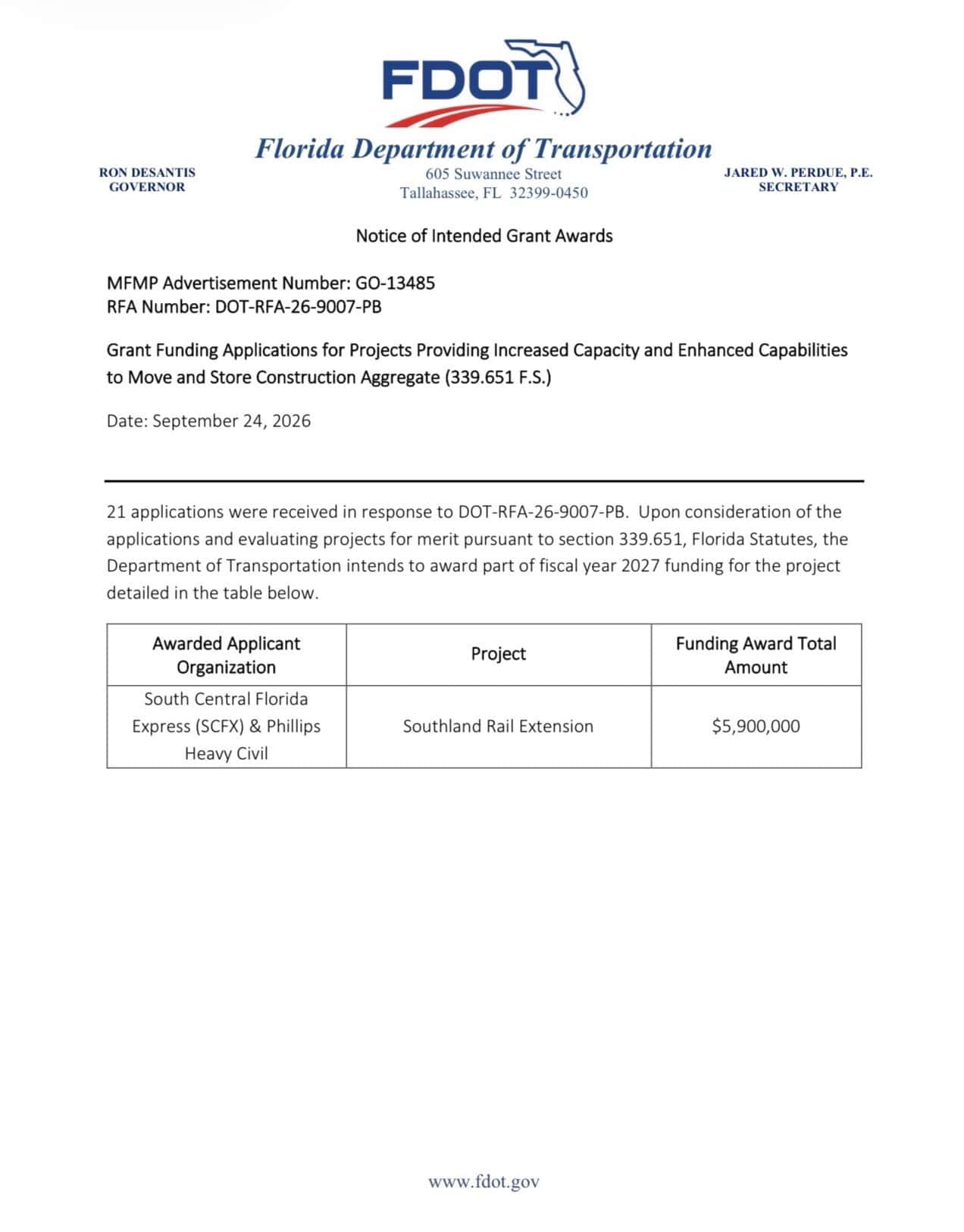
Meanwhile, a September 24, 2026 Florida Department of Transportation notice lists a proposed $5.9 million grant for the Southland Rail Extension, naming South Central Florida Express/Phillips Heavy Civil. A copy of the notice is posted by Captains For Clean Water. It is a notice of an intended award. It does not prove the money has been paid.
What is being proposed?
Phillips and Jordan describes Southland as a public-private partnership. Its current website says private dollars would fund initial construction, but the project would receive public funding. That distinction matters when weighing claims about its cost to taxpayers.
Southland is separate from the public Everglades Agricultural Area Reservoir, often called the EAA Reservoir. That reservoir is designed to store excess Lake Okeechobee water and, with treatment wetlands, send cleaner water south. The state’s announced completion target is 2029. Its purpose includes reducing harmful releases to the St. Lucie and Caloosahatchee estuaries.
What do the records show?
On September 28, SFWMD granted Southland another 60-day extension. An updated water proposal is expected December 1, 2026. The district’s website lists four rounds of extensions since August 2025.
A September 18 technical memorandum prepared for Southland describes pumping groundwater to support mining and related construction. It estimates 45.36 million gallons a day for the main dewatering operation and requests a permit through December 2039. The same consultant argues that harmful effects would be minimal. These are the applicant’s proposals and conclusions, not proof of current pumping or an independent finding of safety.
SFWMD’s evaluation criteria address public benefits, financing, water quality, available water, and compatibility with nearby infrastructure. Those are basic questions for a proposed water project.
What about the risk to the Everglades reservoir?
The Army Corps of Engineers has raised concerns about possible effects on the EAA Reservoir and its treatment area. The Everglades Foundation’s account of a July 2025 Corps letter identifies seepage, water operations, and water availability as issues needing analysis.
That supports taking the risk seriously. It does not support saying the Corps has concluded that damage is certain.
Why cover this from Sumter County?
This project is in Palm Beach County. The records reviewed here do not establish a threat to Sumter County wells.
The statewide issue is how public money and environmental promises are checked before major projects move forward.
Several questions remain: Is the rail grant final? What independent review addresses risks to the nearby restoration project? What binding terms guarantee the promised water storage? And what can proceed if that water agreement never happens?
OurSumter has prepared records requests to pursue those answers. A proposed benefit deserves a clear explanation of what will be delivered, when it will be delivered, and who must pay if the promise falls short.
Leave a Reply